Send MP3 and MP4 Files Between iPhone and Mac with AirDrop
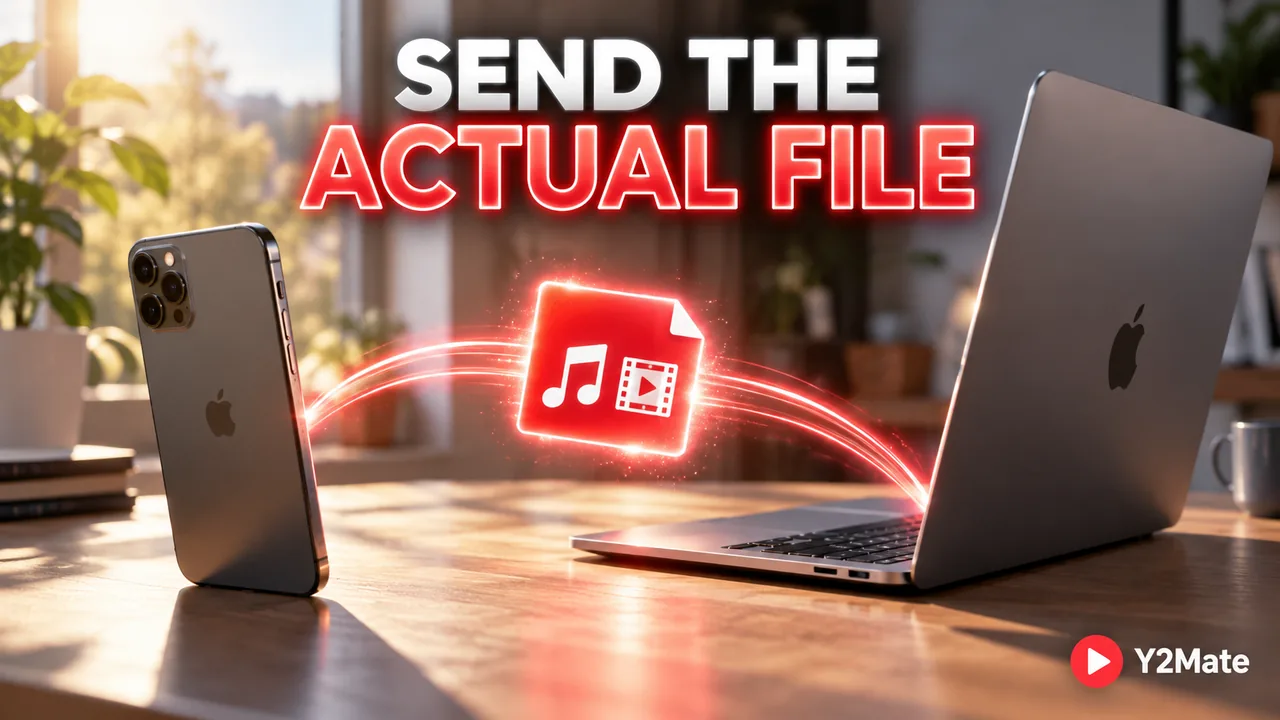
AirDrop is useful when the recording is already on one of your devices and you want to use it on another nearby Apple device. The important first step is sharing the actual file, not merely its web address. After completing a permitted download through Y2Mate, locate the saved MP3 or MP4 and open it once before starting the transfer.
Sending the file does not add it to every music library or make every player support it. AirDrop handles the handoff; finding and playing the received copy is the next part of the task. Keep the original until you have confirmed both stages.
Start with a completed, identifiable file
On iPhone, look in the Files app for the download you intend to send. On Mac, find it in Finder. Check its name and location, particularly if you have several versions or repeated downloads. If you are unsure where the browser saved it, see finding MP3 and MP4 files on iPhone before opening the sharing controls.
Play a short section and confirm that it is the right recording. A file that is still being downloaded or that only looks like a local item deserves attention before sharing. Do not assume that a title shown on a webpage is the same thing as a completed local file.
Consider giving the file a descriptive name while keeping its extension intact. For example, “practice-session-take-two” is easier to identify than several numbered copies. A clear name also helps the recipient decide whether the transfer request is the one they expected.
Prepare the nearby devices
Bring the devices close together, enable Wi-Fi and Bluetooth, and check the receiving device's AirDrop visibility. A Personal Hotspot connection can interfere with the expected setup, so review that if the devices do not appear. Prefer a limited receiving setting that suits the transfer rather than leaving broad visibility enabled unnecessarily.
Confirm the intended recipient directly. A device name alone can be ambiguous in a room with several phones or laptops. If current software asks for an additional code or confirmation, follow the prompts on the two devices involved rather than approving an unexpected request. Interface details vary between operating-system versions.
For a shared Mac, check which account is in use and who will have access to the received copy. This is especially relevant for your own voice recordings, unreleased work, or private lessons. A technically successful transfer to the wrong account is still the wrong result.
Share from the file, then watch for completion
In Files on iPhone, select the recording and open its Share options, then choose AirDrop and the intended recipient. From Mac, select the file in Finder and use its sharing controls to choose AirDrop. Review the receiving device's prompt when one appears, and allow the transfer to finish before moving away or closing the relevant workflow.
Make one deliberate attempt and check its status rather than tapping repeatedly. Repeated attempts can leave several copies with similar names, making it harder to know which one was complete. If the transfer fails, verify the original still opens locally and then check device visibility and connectivity before retrying.
Sharing from a browser's address bar sends a link, which is a different task. If the recipient receives a webpage instead of a media file, return to the saved item in Files or Finder. You do not need to start a new conversion simply because the wrong thing was shared.
Locate and play the received copy
After the handoff, follow the receiving device's notification or offered opening choice. Check the destination app or folder rather than assuming all file types arrive in the same place. On a Mac, inspect Downloads if the file is not immediately obvious. On an iPhone, use the opening or saving options offered for the received file and note where you keep it.
Confirm the filename, approximate size, and duration, then play part of the received recording. For a video, check sound as well as the picture. If the transfer succeeds but playback fails, treat that as a player or file-format question rather than automatically assuming AirDrop changed the recording.
Receiving an MP3 does not by itself synchronize an organized Music library. If your goal is library management, that requires its own supported workflow. For a simple local listening copy, opening the received file in a compatible app may be all you need.
Finish with a useful comparison
Keep both copies until you have checked the result on the device where you intend to use it. If you renamed the file, make a note of the new name so that a future search is straightforward. Restore a suitably limited receiving setting after the transfer if you broadened it temporarily.
For future source selection, the YouTube Downloader page brings search and available format choices together. If a received video will not play, the explanation of containers and codecs is a better next step than sending the same unsupported file repeatedly. Successful sharing means the intended file reached the intended person or device and can be located again.